
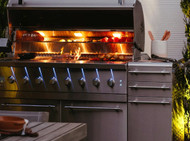
304 vs 430 Stainless Steel Grills: Durability & Rust Prevention
Posted by The BBQ Authority Team on Nov 13th 2026
304 stainless steel contains nickel along with chromium, which gives it much better resistance to rust and corrosion than 430 stainless. 430 is cheaper, magnetic and more likely to develop surface rust and discoloration outdoors. For a grill that lives outside year-round, especially in a built-in outdoor kitchen, 304 is usually worth the higher price. And no stainless steel is completely rust-proof, so how you care for it matters too.
Here's a story that plays out every spring. Someone pulls the cover off a grill that looked showroom-perfect when they bought it two summers ago, and finds orange freckles across the lid, a brown haze along the handles and a rusty ring where the grease tray sits. It's labeled "stainless steel," so how did this happen?
The answer is usually in the steel itself. "Stainless steel" is a family of metals, not one material, and the grade a manufacturer chooses can be the difference between a grill that still gleams after a decade and one that starts showing its age in a season or two.
What Makes Stainless Steel "Stainless"
All stainless steel is iron mixed with at least about 10.5% chromium. The chromium reacts with oxygen to form an invisible, self-healing layer on the surface, called the passive layer, that protects the iron underneath from rusting. Scratch it, and it reforms on its own.
The trouble starts when that layer gets overwhelmed: by salt air, pool chemicals, trapped moisture, acidic food drippings, or tiny particles of regular steel embedded in the surface. That's where the other ingredients in the alloy, especially nickel and molybdenum, make a real difference.
The Grades You'll See on Grill Spec Sheets
| Grade | Key ingredients | Magnetic? | Rust resistance outdoors | Where you'll find it |
|---|---|---|---|---|
| 201 | Chromium, manganese, low nickel | Usually slightly | Fair; prone to surface rust | Budget grills and carts |
| 430 | Chromium, little to no nickel | Yes | Moderate; can rust and discolor | Entry-level stainless grills, panels and trim |
| 304 | About 18% chromium, 8% nickel ("18/8") | Little to none | Very good | Premium grills, burners, grates, outdoor kitchen components |
| 316 | Like 304, plus molybdenum | Little to none | Excellent, even near salt water | Coastal and marine-grade outdoor kitchens |
430 stainless
430 is a ferritic stainless steel. It has chromium but little or no nickel, which keeps the cost down. It looks great on day one and resists rust reasonably well in dry, mild conditions. Outdoors, especially in humid or wet climates, it's more likely to show surface rust spots and brownish discoloration over time.
304 stainless
304 is an austenitic stainless steel, often called 18/8 for its roughly 18% chromium and 8% nickel. The nickel makes the protective layer stronger and more stable, so 304 holds up much better against moisture, heat and cleaning. It's the standard for premium grills and commercial kitchens for a reason.
316 stainless
316 adds molybdenum to the 304 recipe, which gives extra protection against chlorides, the salt in sea air and the chlorine around pools. If your outdoor kitchen sits near the ocean or right next to a pool, 316 components or extra care are worth considering.
How to Tell What Your Grill Is Made Of
Check the spec sheet first. Reputable manufacturers list the steel grade for each major part. Look closely, because many grills mix grades: a 304 firebox and burners with a 430 cart or side panels, for example. That's not necessarily a problem, but you should know what you're paying for.
Try the magnet test. A magnet sticks firmly to 430 stainless and barely, if at all, to 304. It's a useful quick check in a showroom, but not foolproof. Bending, welding and forming can make 304 slightly magnetic in spots, so use the spec sheet as the final word.
Look at the gauge, too. Steel thickness is measured in gauge, and a lower number means thicker metal. A 14-gauge panel is thicker and sturdier than a 16- or 18-gauge one. Thick 304 steel holds heat better, dents less and usually lasts longest.
Why Grade Matters on a Premium Grill
Grill grade isn't just about looks. The parts that take the most abuse are the burners, the cooking grates and the firebox, which sit through hundreds of heat cycles, grease and moisture every year. When those parts are made of 304, they're far less likely to rust through, which is why many premium brands back them with long warranties.
That's a big part of why a premium grill can outlast several budget grills. When you compare models, look at both the steel grade and the warranty on each part. Our Gas Grill Warranty Comparisons page is a helpful starting point, and Best Luxury Grills in 2026 and Best Premium Gas Grills for Backyard Kitchens walk through top models.
BBQ Authority specializes in premium gas grills from $1,000 to $10,000+ for homeowners and contractors, and our team can pull the spec sheet for any grill we carry if you want to compare materials part by part.
Why Stainless Steel Still Rusts (Even 304)
Even the best stainless can show rust spots. The usual culprits:
- Iron contamination. Steel wool, carbon-steel wire brushes, or sparks and dust from nearby grinding or construction leave tiny bits of regular steel on the surface. Those particles rust and stain the stainless around them.
- Salt and chlorine. Coastal air, de-icing salt and pool chemicals attack the protective layer.
- Trapped moisture. Covering a wet grill, or using a cover that doesn't breathe, holds water against the steel for days.
- Grease and food residue. Acidic drippings and old grease left sitting can break down the surface.
- Tea staining. A light brown discoloration that's common outdoors, especially in humid or coastal areas. It's mostly cosmetic and usually cleans off.
How to Keep Your Stainless Grill Looking New
After every cook
- Burn off residue on high for several minutes, then brush the grates with a quality grill brush.
- Empty or wipe the grease tray when it starts to fill.
- Let the grill cool and dry before putting on the cover.
Every few weeks
- Wipe exterior surfaces with warm water and mild dish soap, or a cleaner made for stainless steel.
- Always wipe in the direction of the grain, the faint lines in the metal. Wiping across them can leave streaks and scratches.
- Rinse and dry completely with a soft microfiber cloth.
What to avoid
- Steel wool and carbon-steel scrubbers, which leave rust-causing particles behind
- Chlorine bleach and harsh oven cleaners on exterior surfaces
- Abrasive pads on polished or brushed finishes
- Leaving a cover on a wet grill for long stretches
Removing light surface rust
For small rust spots or tea staining, a non-abrasive stainless steel cleaner or a gentle cleaner made for stainless, applied with a soft cloth in the direction of the grain, usually does the job. Rinse well and dry afterward. Test any cleaner in a hidden spot first, and follow your grill manufacturer's care instructions, since some finishes need special products.
Seasonal care
Before winter, give the whole grill a deep clean, dry it fully and cover it with a breathable grill cover. Our Fall & Winter Grilling Tips + How to Winterize Your Grill and How Often Should You Clean Your Grill? guides lay out a full schedule.
Planning an Outdoor Kitchen? Think Beyond the Grill
In a built-in kitchen, every stainless component faces the same weather: access doors, drawers, side burners, refrigeration and sinks. Matching grades across the island keeps the finish consistent and avoids one part aging faster than the rest. If you live near the coast or have a pool close by, ask about 316 components or a more frequent cleaning routine.
BBQ Authority offers built-in grill packages and outdoor kitchen components for custom backyard designs, so you can match materials across your islands, storage and refrigeration. Our Outdoor Kitchen Planning: Components & Costs guide covers the rest.
Top Picks for Built-to-Last Stainless
Heavy-duty premium grills built in the USA for serious outdoor kitchens. See our American Made Grills Pricing by Model guide.
2. Fire Magic
A long-standing premium brand known for heavy stainless construction and built-in grills.
Premium freestanding and built-in grills across a wide range of price points. BBQ Authority is the leading Napoleon grill dealer with the largest in-stock selection available for immediate shipment.
4. Grill Covers
The simplest way to protect stainless from rain, snow and debris between cooks.
5. Grill Grids and Grill Parts
Replace worn grates and burners to bring an older grill back to life.
Frequently Asked Questions
Is 304 or 430 stainless steel better for a grill?
304 is better for most outdoor grills. Its nickel content gives it much stronger resistance to rust and corrosion. 430 costs less but is more likely to rust and discolor outdoors.
How can I tell if my grill is 304 stainless steel?
Check the manufacturer's spec sheet for each part. A magnet test helps too: magnets stick strongly to 430 and barely to 304, though welded or formed 304 can be slightly magnetic.
Can 304 stainless steel rust?
Yes, though much less easily than 430. Salt air, pool chemicals, trapped moisture and iron particles from steel wool or wire brushes can all cause surface rust or staining.
What is 316 stainless steel, and do I need it?
316 adds molybdenum for extra protection against salt and chlorine. It's worth considering if your grill or outdoor kitchen is near the ocean or a pool.
How do I remove rust spots from my stainless grill?
Use a non-abrasive stainless steel cleaner and a soft cloth, wiping with the grain. Rinse and dry thoroughly. Avoid steel wool and chlorine bleach.
Does grill gauge matter?
Yes. A lower gauge number means thicker steel, which holds heat better, resists dents and usually lasts longer.
Should I cover my stainless steel grill?
Yes, once it's cool and dry. A breathable cover protects it from rain, snow and debris without trapping moisture.
Invest in Steel That Lasts
A grill built from the right stainless steel, and cared for with a few simple habits, can look and cook like new for years. If you're comparing grills and want to know exactly what's under the hood, BBQ Authority provides detailed technical information and buying guidance for every premium grill brand, plus warranty support and post-purchase service for every premium grill we sell. Shop premium grills at bbq-authority.com or call 866-238-9228, and choose a grill that still shines long after the first season.