
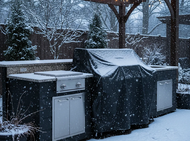
How to Winterize Your Outdoor Kitchen: Fridge, Ice Maker, Sink & Grill
Posted by The BBQ Authority Team on Nov 25th 2026
To winterize an outdoor kitchen, shut off and drain every water line before the first hard freeze, clean and dry the ice maker, empty or winterize the refrigerator according to its manual, clean and cover the grill, and protect stainless steel and countertops from moisture and de-icing salt. Water is the biggest threat: it expands when it freezes and can crack lines, valves and ice maker parts. A few hours of work in late fall can prevent expensive repairs in spring.
The first truly cold night of the season tends to sneak up on people. One week you're grilling burgers in a sweatshirt, and the next morning there's frost on the patio furniture and a thin layer of ice in the dog's water bowl. If your outdoor kitchen still has water sitting in the ice maker and sink lines, that same freeze is happening inside your appliances.
Your grill can handle a Midwest winter. The plumbing and refrigeration in your island usually can't, at least not without some help. Here's how to winterize an outdoor kitchen, from the water lines to the grill, so every part is ready for the cold.
When Should You Winterize?
Start before overnight temperatures regularly dip below freezing. In the Chicago area and much of the Midwest, that's typically late October through November, but a single early cold snap can do damage. If you're reading this and haven't winterized yet, do the water lines first; they're the most urgent.
Outdoor Kitchen Winterizing Checklist
| Component | What to do | Priority |
|---|---|---|
| Water supply lines | Shut off the indoor supply valve, open faucets and drain the lines | Before the first hard freeze |
| Ice maker | Shut off water, drain the unit and lines, clean and dry, leave the door ajar | Before the first hard freeze |
| Sink | Drain supply lines, clear the drain trap per your plumber's advice | Before the first hard freeze |
| Refrigerator and beverage center | Follow the manual: keep running if rated for winter, or empty, clean, unplug and prop the door open | Early winter |
| Kegerator | Remove the keg, clean the lines, disconnect CO2, then treat like a refrigerator | Early winter |
| Grill and side burners | Deep clean, burn off, disconnect propane, cover | Anytime before storage |
| Pizza oven | Clean out ash, keep dry, cover | Anytime before storage |
| Stainless steel and countertops | Clean, dry, protect from salt and standing water | Before snow |
The Water Lines: Do These First
Any appliance or fixture connected to water is at risk when temperatures drop. Water left in a line can freeze, expand and split pipes or crack valves, and you often won't see the damage until you turn the water back on in spring.
- Shut off the water supply to the outdoor kitchen at the indoor valve.
- Open the outdoor faucets and let the lines drain completely.
- Disconnect and drain any hoses or supply lines to the ice maker and sink.
- Consider blowing out the lines with compressed air, especially if they don't drain fully on their own. Many homeowners have a plumber or irrigation company do this when they winterize sprinkler systems.
- Leave faucets open through the winter so any remaining water has room to expand.
If you're not sure where your outdoor kitchen's water lines run or how they drain, a licensed plumber can winterize them for you.
Winterizing an Outdoor Ice Maker
An outdoor ice maker is the most freeze-sensitive appliance in most outdoor kitchens. They hold water in the reservoir, the water valve, the lines and sometimes a drain pump.
- Turn off the water supply and unplug the unit, or turn it off at the GFCI outlet.
- Remove all ice from the bin.
- Drain the unit fully. Many ice makers have a specific drain procedure or a winterizing setting; check your owner's manual and follow it step by step.
- Clean and sanitize the bin and interior, then dry everything thoroughly.
- Leave the door slightly open to prevent mold and odors.
Some manufacturers require this process to keep warranty coverage, so don't skip the manual.
Outdoor Refrigerators, Beverage Centers and Kegerators
An outdoor refrigerator is built for heat and humidity, but not every unit is designed to keep running in freezing temperatures. Check the manual for its minimum operating temperature.
If your unit is rated for winter use, you can leave it running, though it's still smart to remove anything that could freeze and burst, like canned soda.
If it isn't, or you won't use it until spring:
- Empty it completely, including cans and bottles, which can freeze and burst.
- Clean the interior and dry it.
- Unplug the unit or turn it off at the GFCI outlet.
- Prop the door open slightly to prevent mold and odors.
For a kegerator, remove the keg, clean the beer lines and faucet, and disconnect and store the CO2 tank according to the manufacturer's instructions before shutting it down. Our outdoor refrigerators, kegerators and ice makers guide covers more about outdoor-rated units.
The Grill and Side Burners
Whether you'll keep grilling all winter or put the grill to sleep until spring, the first step to winterize a grill is a good cleaning.
- Burn off and brush the grates to remove grease and food residue.
- Empty and clean the grease tray so it doesn't attract critters.
- Clean the burners and check for blockages.
- Wipe down stainless surfaces and dry them completely.
- If you're storing it, close the propane tank valve and disconnect it. Store the tank upright and outdoors, never in a garage, basement or house. For natural gas, close the shutoff valve.
- Cover the grill with a breathable, well-fitting grill cover once it's completely dry.
If you'll keep grilling through the winter, our Fall & Winter Grilling Tips cover cold-weather cooking, and our gas grill troubleshooting guide can help if the grill struggles to light on a frigid evening.
Pizza Ovens
Moisture is the enemy of pizza ovens. Water absorbed into stone, brick or refractory materials can expand when it freezes, and an oven that's soaked up moisture over winter can crack if it's fired too hot, too fast in spring.
- Clean out all ash once the oven is completely cool.
- Keep the oven dry and covered with a fitted pizza oven cover.
- In spring, start with a few small, gentle fires to drive out moisture before cooking at full heat. Follow your oven's curing or startup instructions.
Stainless Steel, Countertops and the Island
- Clean and dry all stainless steel before winter. Grease and moisture trapped under snow can lead to staining and rust spots. Our 304 vs 430 stainless steel guide covers cleaning do's and don'ts.
- Keep de-icing salt away from your island and stainless steel. Salt is one of the fastest ways to cause rust and pitting.
- Clear standing water and snow from countertops when you can, especially around seams.
- Check stone countertops to see whether they need resealing before winter.
- Close access doors and drawers and check for gaps where mice or other animals could nest.
Bringing It All Back in Spring
When warm weather returns, reverse the process carefully. Inspect water lines and fittings before turning the water back on, run the ice maker's startup procedure, clean the refrigerator and plug it back in, and check the grill's hoses and connections with a soapy water test before the first cook.
BBQ Authority provides warranty support and post-purchase service for all premium grills sold, so if you find a problem when you open up your outdoor kitchen in spring, reach out before you replace anything.
Top Picks for Winter Protection
1. Grill Covers
Breathable, well-fitting covers to protect your grill from snow and ice.
Keep moisture out of your oven's stone and brick.
Clean grates thoroughly before storage.
4. Grill Parts
Replace worn hoses, burners or igniters before spring.
Frequently Asked Questions
Do I need to winterize my outdoor kitchen?
Yes, especially in areas with freezing temperatures. Water in ice makers, sinks and lines can freeze, expand and damage pipes and appliances.
How do I winterize an outdoor ice maker?
Turn off the water, unplug the unit, remove the ice, drain it fully using the manufacturer's procedure, clean and dry it, and leave the door slightly open.
Can I leave my outdoor refrigerator on in winter?
Only if it's rated for winter operation. Check the manual's minimum operating temperature. Otherwise, empty it, clean it, unplug it and prop the door open.
Should I cover my grill in winter?
Yes, once it's clean and completely dry. Use a breathable, well-fitting cover to keep out snow and moisture.
Where should I store my propane tank in winter?
Upright and outdoors in a well-ventilated area, never inside a garage, basement or house.
Protect Your Investment Before the Deep Freeze
A little outdoor kitchen winter care now means everything will be ready to go the first warm weekend of spring. If you have questions about winterizing your grill or outdoor kitchen appliances, BBQ Authority offers live chat, phone and email support from people who know outdoor kitchens. Shop covers and parts at bbq-authority.com or call 866-238-9228, and make sure the only thing frozen this winter is the ice cream.