
Natural Gas vs Propane Grill: Cost, Installation & Which to Choose
Posted by The BBQ Authority Team on Nov 13th 2026
Choose natural gas if your home already has a gas line near the patio and the grill will stay in one spot, especially in a built-in outdoor kitchen. Choose propane if you want to move the grill around, don't have a gas line, or want the simplest setup. Both cook equally well when the grill is built for that fuel; the real differences are convenience, installation and ongoing cost.
It's usually a Saturday afternoon when the question gets decided for you. The burgers are half done, the guests are laughing on the deck, and the flames suddenly sputter down to nothing. Somebody has to drive to the gas station for a tank swap while the patties sit there going cold.
If that story sounds familiar, you've probably wondered whether natural gas would make life easier. Sometimes it does. Sometimes the cost of running a line outweighs the convenience. Here's how to figure out which one fits your home.
The Short Version
| Attribute | Natural gas | Propane |
|---|---|---|
| Fuel supply | Piped from your home's gas line; never runs out mid-cook | 20-lb tank (or larger) that needs refilling or swapping |
| Upfront cost | Higher if a gas line must be run to the patio | Low; buy a tank and connect it |
| Ongoing fuel cost | Often cheaper per hour of grilling, but rates vary by area | Often more per hour; tank refills add up for frequent grillers |
| Installation | Licensed gas professional; may need a permit | Usually do-it-yourself; just connect the regulator |
| Portability | Fixed in place (freestanding grills can use a quick-disconnect hose) | Move it anywhere on the patio, or take a portable model on the road |
| Best for | Built-in outdoor kitchens, frequent grillers, homes with gas service | Renters, freestanding grills, homes without gas lines, occasional grillers |
| Cold weather | Steady supply | Tank pressure can drop in very cold temperatures, especially when the tank is low |
Does One Cook Better Than the Other?
Not in any way you'll taste. Propane holds more energy per cubic foot than natural gas, roughly 2,500 BTUs versus about 1,000. Grill makers account for that by building natural gas and propane versions with different valves and orifice sizes, so a grill set up for its fuel delivers about the same heat either way.
What matters far more for flavor and searing is the grill itself: burner quality, cooking grates, heat distribution and features like an infrared sear burner. A well-built propane grill will outcook a poorly built natural gas grill every time, and vice versa.
The Case for Natural Gas
The biggest reason people love natural gas is simple: it never runs out. No checking tank gauges before a party, no hauling a 37-pound full tank from the car, no tank swap in the middle of a brisket cook.
Natural gas makes the most sense when:
- You're building an outdoor kitchen and every appliance will be permanent: the grill, side burners, a power burner or a gas pizza oven.
- You already have a gas line stubbed out to the patio, or one runs close by.
- You grill several times a week, year-round, and want the lowest ongoing fuel cost.
The trade-offs:
- Installation cost. Running a new line from your meter to the patio can be inexpensive if it's a short run, or surprisingly costly if it has to go under concrete, across a yard or through finished walls. Get a quote from a licensed gas professional before you buy the grill.
- Permits and code. Many towns require a permit and inspection for new gas lines. Your installer should know the local rules.
- Location is locked. Once the line is in, that's where the grill lives. Freestanding natural gas grills can use a quick-disconnect hose, but they can only roll as far as the hose reaches.
The Case for Propane
Propane wins on flexibility. You can set up a propane grill the day it arrives, move it to the shady side of the deck in July, and roll it into the garage when you're done for the season (store the tank outside, never indoors).
Propane makes the most sense when:
- There's no natural gas line near your patio, or no natural gas service at your home.
- You rent, or might move in the next few years.
- You want a freestanding gas grill or a portable grill for tailgating and camping.
- You grill a few times a month, not a few times a week.
The trade-offs:
- Running out. A standard 20-pound tank lasts many hours of grilling, but exactly how many depends on how big your grill is and how hot you run it. Keeping a full spare tank on hand solves the problem.
- Cost over time. For frequent grillers, propane refills usually cost more per hour of cooking than natural gas. In some regions the gap is small; in others it's significant.
- Cold weather. Propane pressure drops as temperatures fall, which can mean weaker flames in the middle of a Midwest winter. A fuller tank helps. Our Fall & Winter Grilling Tips cover more cold-weather advice.
Can You Convert a Grill From One Fuel to the Other?
Sometimes, but don't count on it. Some manufacturers sell conversion kits for certain models; others don't allow conversion at all, and doing it without an approved kit can void the warranty and create a real safety hazard. When conversion is allowed, it usually means swapping orifices and the regulator or hose, and it should be done by a licensed gas professional.
The safest approach is to decide on your fuel before you buy and order the grill built for it. If you're on the fence, ask about conversion options for the exact model before you check out. BBQ Authority provides detailed technical information and buying guidance for every premium grill brand, and our team can tell you whether a specific grill can be converted.
Planning an Outdoor Kitchen? Decide Fuel First
In a built-in setup, fuel affects more than the grill. Every gas appliance in your island needs to match, and the gas line needs to be sized for all of them running at once. Plan the layout, the line and the appliances together.
A few things to sort out early:
- Where the gas line will enter the island and where the shutoff valve will go
- Whether the line can supply the grill, side burner and pizza oven at the same time
- Whether your island needs ventilation panels for gas safety (check the grill's installation manual)
- Whether you'll want electricity for lights, a rotisserie motor or refrigeration
Our Outdoor Kitchen Planning: Components & Costs guide walks through the full process, and Best Built-In Gas Grills for First-Time Buyers can help you narrow down the grill. BBQ Authority offers built-in grill packages and outdoor kitchen components for custom backyard designs, so you can match everything in one order.
Quick Decision Guide
| If this sounds like you... | Choose |
|---|---|
| "I'm building an outdoor kitchen and have gas at the house." | Natural gas |
| "I grill three or more times a week, all year." | Natural gas (if a line is practical) |
| "I rent, or might move soon." | Propane |
| "I want to move my grill around or take one tailgating." | Propane |
| "I don't have natural gas service." | Propane |
| "Running a line would mean tearing up a patio." | Propane, at least for now |
Safety Basics for Either Fuel
- Always light your grill with the lid open.
- Check hoses and connections at the start of each season with a soapy water test; bubbles mean a leak. Don't use the grill until any leak is fixed.
- Store propane tanks upright and outdoors, never in a garage, basement or house.
- Have any natural gas line, hookup or conversion installed by a licensed professional.
Our grill maintenance schedule covers seasonal checks for burners, hoses and igniters.
Top Picks for Either Fuel
The natural choice for natural gas outdoor kitchens. Most models are available in both natural gas and propane versions.
Freestanding grills on carts that work with a propane tank or a natural gas quick-disconnect hose.
Offered in propane and natural gas versions across the lineup. BBQ Authority is the leading Napoleon grill dealer with the largest in-stock selection available for immediate shipment.
4. Side Burners and Power Burners
Add cooking space to your island; just match the fuel to your grill.
Countertop and built-in options that can share the same gas supply as your grill.
Frequently Asked Questions
Is a natural gas grill better than a propane grill?
Neither is better for cooking. A grill built for its fuel delivers about the same heat either way. Natural gas is more convenient for permanent setups; propane is more flexible and easier to install.
Is natural gas cheaper than propane for grilling?
Often, yes, per hour of grilling, but rates vary by region. The upfront cost of running a gas line can take years to recover if you only grill occasionally.
Can I hook up a propane grill to natural gas?
Not without the right parts. A propane grill needs a manufacturer-approved conversion kit installed by a licensed professional, and some models can't be converted at all.
How long does a 20-lb propane tank last on a grill?
It depends on the size of the grill and how high you run the burners. Many grillers get several weeks of regular use from a tank, but keep a full spare on hand before big cooks.
Do I need a permit to run a natural gas line to my grill?
Many cities and towns require one. A licensed gas professional can tell you what's needed where you live.
What fuel is best for an outdoor kitchen?
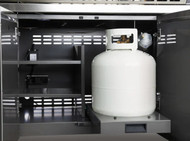
If your home has natural gas service, it's usually the best choice for a permanent outdoor kitchen. If not, propane works well, often with the tank stored in a ventilated cabinet built into the island.
Pick the Fuel That Fits Your Backyard
There's no wrong answer here, only the right fit for your home and how you cook. If you're still undecided, BBQ Authority specializes in helping first-time premium grill buyers choose the right model, and our team can walk you through fuel, installation and outdoor kitchen layout by live chat, phone or email. Shop gas grills at bbq-authority.com or call 866-238-9228, and make sure your next cookout never ends with a run to the gas station.